


Flatbed Towing
Specialized service for transporting vehicles safely on a flatbed truck, ideal for long-distance towing or vehicles with low ground clearance.

Roadside Assistance
Immediate help for vehicles experiencing breakdowns, flat tires, dead batteries, or running out of gas on the side of the road.

Winch Out
Service to pull a stuck vehicle out of mud, snow, or a ditch using a winch attached to a towing truck.

Accident Towing
Emergency towing service for vehicles involved in accidents, providing quick and safe removal from the scene to a repair shop.

Lockout Services
Assistance for drivers locked out of their vehicles, using special tools to unlock doors without causing damage.

MotorcycleTowing
Specialized service for transporting motorcycles safely and securely, ensuring they reach their destination without any damage.
Baltimore is a city that never stops moving. From the busy corridors of I-695 to the tight streets of Fells Point and the industrial zones near the port, vehicles of every size are constantly on the road. When a medium duty vehicle breaks down or gets into trouble, the consequences ripple outward fast — blocking traffic, delaying deliveries, and putting drivers in potentially dangerous situations.
That’s where reliable medium duty towing in Baltimore becomes essential. Not every tow truck is built for the job. Box trucks, cargo vans, delivery vehicles, and similar equipment require specialized rigs, trained operators, and the right approach to get the job done safely. If you manage a commercial fleet or simply drive a larger vehicle, knowing who to call before an emergency happens is one of the smartest decisions you can make.
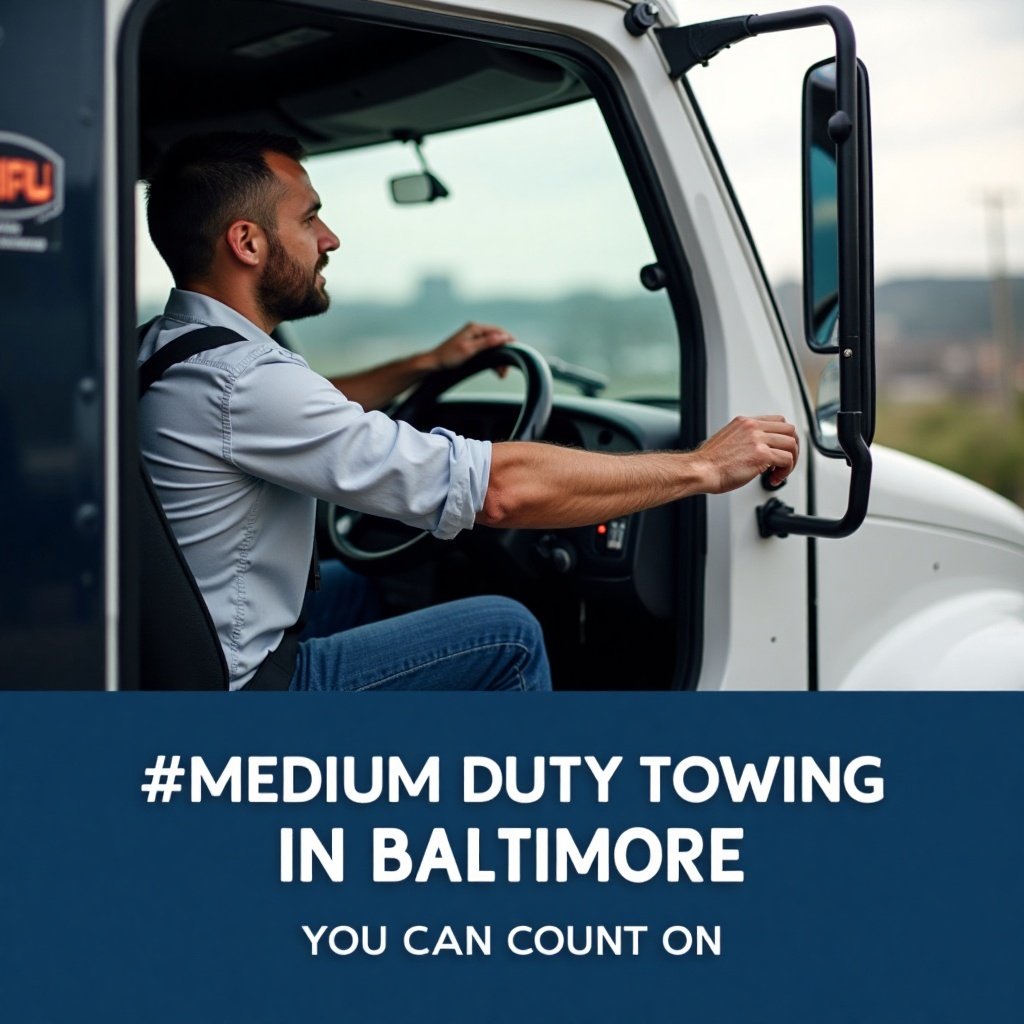
This guide covers everything you need to know about medium duty towing in Baltimore — from understanding what qualifies as medium duty to choosing a provider you can actually trust. Whether you’re a fleet manager coordinating multiple vehicles or a solo driver stuck on the side of the road, the information here will help you make confident, informed decisions. For a broader look at dependable towing options across Baltimore, that resource is worth bookmarking too.
Understanding Medium Duty Towing in Baltimore
What Qualifies as Medium Duty Vehicles and Situations
Medium duty towing covers a specific weight class that sits between standard passenger vehicles and full heavy equipment. Generally, this includes vehicles with a gross vehicle weight rating between 10,001 and 26,000 pounds.
Common examples include box trucks, delivery trucks, cargo vans, shuttle buses, and certain utility vehicles. These aren’t your everyday sedans, but they’re not 18-wheelers either. The equipment needed to tow them safely is purpose-built for this weight range.
| Vehicle Type | Typical GVWR Range | Towing Category |
|---|---|---|
| Cargo Vans | Up to 11,500 lbs | Medium Duty |
| Box Trucks | 12,500 – 19,500 lbs | Medium Duty |
| Delivery Trucks | 14,000 – 26,000 lbs | Medium Duty |
| Shuttle Buses | 10,000 – 22,000 lbs | Medium Duty |
| Utility Vehicles | 12,000 – 24,000 lbs | Medium Duty |
Key Differences Between Light, Medium, and Heavy Duty Towing
Light duty towing handles standard passenger cars, motorcycles, and small SUVs. Heavy duty towing is reserved for semi-trucks, large construction equipment, and oversized loads. Medium duty towing fills the critical gap between these two categories.
Using the wrong equipment creates real risks. A light duty tow truck attempting to move a loaded box truck can cause equipment failure, vehicle damage, and serious safety hazards. Matching the right rig to the right vehicle isn’t optional — it’s a safety requirement.
Medium duty tow trucks are equipped with higher towing capacity, reinforced booms, and stronger winch systems specifically designed for this weight class.
Common Reasons Drivers Need Medium Duty Towing in Baltimore
Breakdowns happen for many reasons. Engine failures, transmission problems, blown tires, and fuel system issues are among the most frequent causes that leave medium duty vehicles stranded.
Baltimore’s road conditions also play a role. Potholes, uneven surfaces, and heavy stop-and-go traffic put extra stress on commercial vehicles. Accident recovery and roadside incidents add to the demand for emergency towing services throughout the city and Baltimore County.
Common Medium Duty Towing Scenarios Across Baltimore Neighborhoods
Breakdowns and Mechanical Failures on Major Roads and Highways
The Baltimore Beltway, I-95, and Route 40 see heavy commercial traffic daily. When a box truck or delivery vehicle breaks down on these corridors, it creates immediate hazards for surrounding drivers and significant delays for the operator.
A fast-responding tow truck with the right towing capacity can clear the scene quickly and safely. 24/7 towing availability is not a luxury on these roads — it’s a necessity. Delays in response can escalate a manageable breakdown into a multi-vehicle incident.
Flatbed towing is often the preferred method for highway recoveries, keeping the disabled vehicle stable and secure during transport.
Accident Recovery and Roadside Incidents Within City Limits
Urban accident recovery presents unique challenges. Narrow streets, parked cars, pedestrian traffic, and limited maneuvering space all complicate the job. Baltimore’s older neighborhoods weren’t designed with large tow trucks in mind.
Experienced operators know how to navigate these environments. Winch out service becomes especially valuable when a vehicle has left the roadway or ended up in a position that standard towing can’t address. Vehicle recovery in tight urban settings requires both skill and the right equipment.
Working with a local towing company that knows Baltimore’s street layout makes a measurable difference in response efficiency and overall safety.
Commercial Fleet and Work Vehicle Towing Needs
Fleet managers deal with a different set of pressures. When one vehicle goes down, it affects schedules, deliveries, and client commitments. Commercial towing providers who understand fleet services can prioritize response and coordinate with dispatch to minimize downtime.
Some towing companies offer dedicated fleet accounts, which streamline billing and provide priority service. This kind of arrangement is worth exploring for any business operating multiple medium duty vehicles in the Baltimore area.
Motor club services can also provide coverage for commercial fleets, though it’s important to verify that medium duty vehicles are included in the policy terms.
Parking Lot, Garage, and Tight-Space Recoveries
Not every towing job happens on an open road. Parking garages, loading docks, and commercial lots present their own recovery challenges. Low clearances, tight turns, and structural limitations restrict what equipment can be used.
Operators trained in confined-space recovery use specialized rigging and positioning techniques to extract vehicles without causing additional damage. This kind of expertise separates a competent towing service from one that simply shows up with a truck.
Flatbed towing and wheel-lift systems are commonly used in these scenarios, depending on the vehicle type and available space.
Choosing a Reliable Medium Duty Towing Provider in Baltimore
Licensing, Insurance, and Compliance with Local Regulations
Maryland has specific requirements for towing operators, including licensing, insurance minimums, and compliance with state and local regulations. Any provider you work with should be fully licensed and insured without exception.
Ask for proof of insurance before agreeing to service. A legitimate towing company will provide this without hesitation. Operating with an unlicensed or underinsured provider puts you at financial and legal risk if something goes wrong during the tow.
Baltimore City and Baltimore County may have additional permit requirements for commercial towing operations. Verify that your provider meets all applicable standards.
Response Times, Coverage Areas, and Dispatch Capabilities
Response time matters enormously in an emergency. A towing service that takes two hours to arrive on a busy highway creates compounding problems. Ask providers about their average response times and how they dispatch vehicles across different parts of the city.
Coverage area is equally important. Some local towing companies focus on specific neighborhoods or zones, while others cover the full Baltimore metro area including surrounding counties. Know your provider’s reach before you need them.
Good dispatch capabilities — including GPS tracking and real-time communication — indicate a professionally run operation that takes response efficiency seriously.
Equipment, Training, and Safety Standards for Tow Operators
The quality of the equipment and the training of the operators are the two most important factors in a safe tow. Medium duty towing requires specific rigs, and those rigs need to be properly maintained and regularly inspected.
Operators should hold relevant certifications and have hands-on experience with the vehicle types they’re towing. Wrecker service for medium duty vehicles is not a skill that transfers automatically from light duty work.
Ask about the company’s safety standards and whether their operators receive ongoing training. A provider that invests in their team is one that takes the job seriously.
Pricing Structures, Transparency, and Avoiding Hidden Fees
Towing rates for medium duty vehicles vary based on distance, vehicle type, time of day, and the complexity of the recovery. Getting a clear breakdown before service begins protects you from unexpected charges.
Reputable providers offer a free towing estimate and explain their pricing structure upfront. Be cautious of companies that are vague about costs or add fees after the fact. Transparency in billing is a basic standard that every professional towing service should meet.
Ask specifically about after-hours rates, mileage charges, and any fees associated with winch out service or specialized recovery equipment.
Checking Reviews, References, and Community Reputation
Online reviews give you real insight into how a towing company actually performs. Look for patterns in feedback — consistent praise for fast response and professional handling is a good sign. Repeated complaints about billing issues or damaged vehicles are red flags.
Ask for references from commercial clients if you’re evaluating a provider for fleet services. A company with a strong track record in commercial towing will have no problem connecting you with satisfied customers.
Community reputation matters in Baltimore. Local towing companies that have built trust over time tend to be more accountable and more invested in maintaining their standing.
Practical Tips for Drivers and Fleet Managers
How to Prepare Your Vehicle for a Medium Duty Tow
Before the tow truck arrives, take a few steps to make the process smoother. Remove any loose cargo from the vehicle if it’s safe to do so. Secure any doors or panels that might swing open during transport.
- Note the vehicle’s current condition, including any pre-existing damage
- Locate the vehicle’s towing points or frame specifications if available
- Disable any alarm systems that might activate during the tow
- Gather your registration and insurance documents
Communicating these details to the operator helps them choose the right approach and protects you if any disputes arise later.
Information to Provide When Calling for Towing Assistance
Clear communication speeds up response. When you call for roadside assistance, have the following ready:
- Your exact location, including cross streets or landmarks
- The vehicle’s make, model, and approximate weight
- A description of the problem or incident
- Whether the vehicle is blocking traffic or in a hazardous position
- Your contact number for the driver to reach you directly
The more specific you are, the better equipped the dispatcher is to send the right truck and operator for the job.
Safety Steps to Take While Waiting for the Tow Truck
Staying safe while waiting is critical, especially on busy Baltimore roads. Move away from traffic if possible and stay behind barriers or guardrails. Turn on hazard lights immediately and set out reflective triangles or flares if you have them.
Never stand between your vehicle and oncoming traffic. If you’re on a highway, exit the vehicle and move to a safe distance from the roadway. Stay on the phone with dispatch if you feel unsafe.
For those who also ride motorcycles, the same safety principles apply — and specialized motorcycle towing in Baltimore is available for two-wheeled vehicles that need a different kind of care.

