
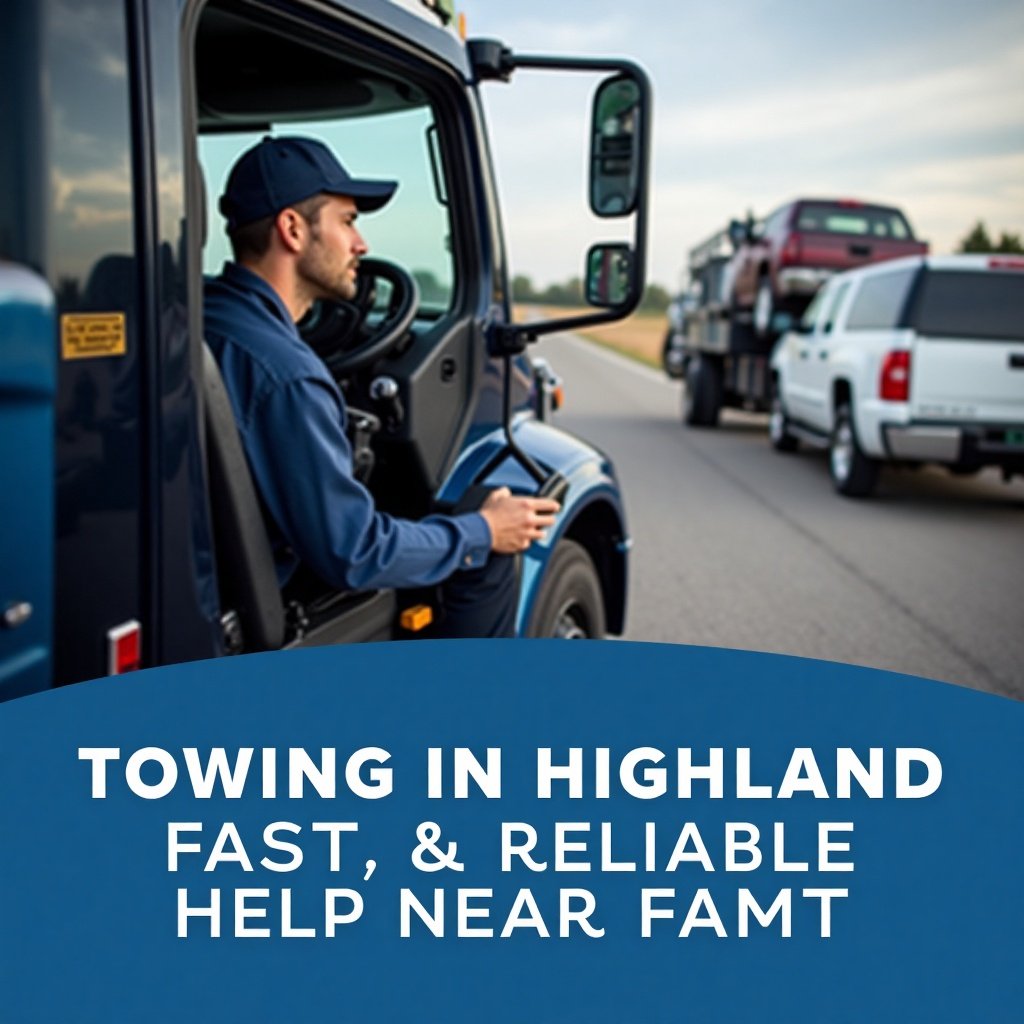
Getting stranded on the road is never part of anyone’s plan. Whether your engine dies on a busy stretch of highway or your tire blows out on a quiet back road, the experience is stressful, disorienting, and sometimes dangerous. That’s why having access to a dependable towing service in Highland matters more than most drivers realize until they actually need one.
Highland drivers face a unique mix of road conditions, from suburban streets to rural routes that can make breakdowns especially inconvenient. A fast, professional tow truck response can mean the difference between a minor inconvenience and a genuinely unsafe situation. Knowing your options before an emergency happens puts you in a much stronger position when things go wrong.
This guide covers everything you need to know about towing in Highland, from understanding the types of services available to choosing the right towing company and protecting yourself through the process. If you’ve ever searched “towing near me” in a panic, this is the resource you’ll want to have read beforehand.
Understanding Towing Services in Highland
What “towing Highland” means: local scope and service areas
Towing in Highland refers to vehicle recovery and transport services operating within and around the Highland area. Local towing companies typically cover a defined radius, responding to calls within their primary service zone while also offering long distance towing for vehicles that need to travel farther.
Service areas can vary significantly between providers. Some towing companies focus exclusively on Highland and immediately adjacent communities, while others operate across a broader regional network. Just as drivers in nearby areas rely on reliable towing help in Curtis Bay, Highland residents benefit most from providers who know local roads, traffic patterns, and common breakdown hotspots.
Common reasons drivers in Highland need towing
Breakdowns happen for all kinds of reasons, and most of them are unpredictable. The most frequent calls towing services receive in Highland include dead batteries, flat tires, engine failures, and accident recovery situations.
- Dead or failed battery requiring a jump start service
- Flat tire when no spare is available or the driver can’t change it safely
- Engine overheating or mechanical failure
- Accident recovery and vehicle removal from the scene
- Running out of fuel and needing fuel delivery
- Keys locked inside the vehicle requiring lockout service
- Off road recovery after a vehicle leaves the roadway
Types of towing: light-duty, medium-duty, heavy-duty, and specialty
Not every tow truck handles every vehicle. Understanding the categories helps you call the right service the first time.
Light-duty towing covers standard passenger cars, motorcycles, and small SUVs. Flatbed towing is the most common method here, keeping all four wheels off the ground and reducing the risk of additional damage during transport.
Medium-duty towing handles larger vehicles like vans, box trucks, and small commercial vehicles. Heavy duty towing is reserved for semi-trucks, buses, and large construction equipment. Specialty towing includes motorcycle towing, exotic car transport, and winching service for vehicles stuck in difficult positions.
| Towing Type | Vehicle Category | Common Method |
|---|---|---|
| Light-duty | Cars, motorcycles, small SUVs | Flatbed, wheel-lift |
| Medium-duty | Vans, box trucks | Integrated tow truck |
| Heavy-duty | Semi-trucks, buses | Rotator, heavy wrecker |
| Specialty | Exotics, off-road vehicles | Flatbed, winching service |
Key differences between urban, suburban, and rural towing in Highland
Highland sits in a zone where suburban and rural road conditions overlap. This creates specific challenges for tow truck operators who must navigate both congested local roads and isolated stretches where response times naturally increase.
Urban towing typically involves faster dispatch and shorter distances. Rural towing in Highland’s outer areas may require longer response windows and specialized equipment for off road recovery situations. Knowing your location precisely when you call makes a significant difference in how quickly help arrives.
Choosing a Reliable Towing Company in Highland
Licensing, insurance, and certifications to look for
A licensed tow truck operator is non-negotiable. Every legitimate towing company in Highland should carry proper state licensing, liability insurance, and operator certifications. These credentials protect you if your vehicle is damaged during the tow.
Ask directly about insurance coverage before agreeing to service. Reputable companies will answer without hesitation. Certifications from industry organizations also signal that operators have received professional training in vehicle handling and safety protocols.
Response times, availability, and dispatch processes
24 hour towing availability is a baseline expectation, not a premium feature. Emergencies don’t follow business hours, and any towing company worth calling should have dispatchers available around the clock.
Response time depends on distance, traffic, and how many trucks are active. A good towing company will give you an honest estimated arrival window rather than a vague promise. Fast towing matters most in dangerous situations, so ask about average response times in your specific area of Highland before you’re ever in a crisis.
Pricing structures, hidden fees, and how to get clear estimates
Cheap towing isn’t always the best deal. Low advertised rates sometimes come with hidden fees for mileage, after-hours service, or vehicle size. Always ask for a complete written or verbal estimate before authorizing any work.
- Hook-up or dispatch fee (charged just to send a truck)
- Per-mile rate after a base distance
- After-hours or holiday surcharges
- Storage fees if your vehicle goes to a lot
- Additional charges for winching service or specialty equipment
Transparent pricing is a sign of a trustworthy towing service. If a company hesitates to give you numbers upfront, that’s a red flag worth taking seriously.
Checking reviews, local reputation, and word-of-mouth recommendations
Online reviews give you a real-world picture of how a towing company treats customers under pressure. Look for patterns in feedback rather than focusing on a single negative or positive review.
Word-of-mouth from neighbors, coworkers, and local community groups is often the most reliable source. Drivers who’ve used a local towing service in an actual emergency will give you honest, unfiltered feedback that no marketing material can match.
Specialized services: roadside assistance, recovery, and long-distance towing
Many towing companies in Highland offer services beyond basic car towing. Roadside assistance packages often include jump start service, tire change service, fuel delivery, and lockout service as standalone calls.
Long distance towing is a separate category that requires planning and clear pricing agreements. If your vehicle needs to travel across state lines or to a distant repair facility, confirm that the towing company has the equipment and insurance coverage for that distance. Drivers in other parts of the region, like those who rely on towing services in Brooklyn, often face similar decisions when choosing between local and regional providers.
Practical Tips for Drivers Who Need Towing in Highland
Immediate steps to take when your vehicle breaks down
The first priority after a breakdown is safety, not your phone. Get your vehicle as far off the active roadway as possible before doing anything else.
- Turn on your hazard lights immediately
- Pull to the shoulder or a safe area away from traffic
- Apply the parking brake once stopped
- Stay inside the vehicle if you’re on a high-speed road
- Place road flares or reflective triangles if you have them
Once you’re in a safe position, call for emergency towing or roadside assistance. Don’t attempt repairs on a busy highway shoulder unless you have no other option.
How to safely wait for a tow on Highland roads and highways
Waiting for a tow truck is one of the most dangerous parts of a breakdown. Stay inside your vehicle with your seatbelt fastened if you’re on a highway or high-traffic road. If you must exit, move well away from the vehicle and stand behind a barrier if one is available.
Keep your hazard lights running and your phone charged. If it’s dark, use your interior dome light to make yourself more visible. Never stand between your vehicle and oncoming traffic while waiting for the tow truck to arrive.
Information to provide when calling a towing service
The more specific you are when calling, the faster help arrives. Dispatchers need accurate information to send the right truck and give you a realistic arrival estimate.
- Your exact location, including cross streets or mile markers
- The make, model, and color of your vehicle
- A description of the problem (flat tire, won’t start, accident)
- Whether the vehicle is drivable or completely immobile
- Your contact number in case the driver needs to reach you
Working with insurance and roadside assistance programs
Many auto insurance policies include towing and roadside assistance coverage. Check your policy before an emergency so you know exactly what’s covered and what the claim process looks like.
Third-party roadside assistance programs through auto clubs or credit card benefits can also cover towing costs. Keep your membership or policy information accessible in your vehicle or saved on your phone. Always confirm coverage limits, since some policies cap reimbursement at a fixed dollar amount that may not cover long distance towing.
Protecting your vehicle: documenting damage and understanding liability
Before the tow truck driver hooks up your vehicle, photograph it from multiple angles. Document any existing damage so there’s no dispute about what happened during transport.
Ask the operator to note any pre-existing damage on the service receipt. Reputable towing companies carry liability insurance that covers damage caused during towing, but having your own documentation protects you if a dispute arises. A few minutes of documentation can save significant frustration later.
Perspectives from Towing Professionals and Local Community
Tow truck operators’ view: challenges of working in Highland
Tow truck operators in Highland deal with a wide range of conditions that most drivers never consider. Navigating narrow rural roads with a loaded flatbed, managing traffic during accident recovery, and responding to calls in poor weather all require significant skill and experience.
Operators consistently point to driver behavior as one of their biggest safety concerns. Vehicles that don’t slow down or move over when passing a tow truck create genuinely dangerous situations. Most states have move-over laws specifically to protect roadside workers, and Highland drivers should know and follow them.
Law enforcement and municipal perspectives on towing and traffic safety
Local law enforcement relies on towing companies to clear accident scenes and remove abandoned or illegally parked vehicles. A fast, professional towing service response directly supports traffic flow and public safety.
Municipal contracts with towing companies are common, and these arrangements come with specific performance standards around response time and pricing. Drivers involved in accidents may have their vehicle towed by a company on the police rotation list, which is why understanding your rights around vehicle release and storage fees matters.
Residents’ experiences: positive stories and common complaints
Most positive experiences with towing in Highland center on fast response, professional drivers, and transparent pricing. Drivers who felt informed and treated respectfully during a stressful situation consistently rate their towing company highly.
Common complaints involve unexpected fees, slow response times, and vehicles that arrived at the shop with new damage. Reading reviews carefully and asking the right questions before authorizing a tow helps avoid the situations that generate those complaints. Drivers across the region, including those who’ve used towing in Owings Mills, report similar patterns in what separates good providers from frustrating ones.
Ethical issues: predatory towing, price transparency, and consumer rights
Predatory towing is